The quick answer
Starlink Roam gives you internet almost anywhere in Australia with a clear view of the sky, which makes it popular with caravanners, grey nomads and 4WD tourers. The big questions for off-grid travel are how much power it uses, which plan suits you, and how you'll mount and run it.
If you're ready to buy, ordering on starlink.com through a referral link gets you a referral reward once your service has been active for two months.
Get Starlink with my referral link
This is my Starlink referral link. If you sign up for Residential or Roam service on starlink.com through it, we both receive a referral reward from Starlink once your service has been active for two months. Starlink sets the amount and terms.
Starlink Mini or Standard?
- Starlink Mini: small, light and designed for travel. It runs on DC power, which makes it much easier to power from a 12V system or power station. Typical power use is roughly 25 to 40W.
- Starlink Standard: a larger dish with stronger performance, often used for longer stays. It typically uses more power, roughly 75 to 100W, and usually runs from 240V, so off-grid you'll need an inverter.
- Check Starlink's current specifications for the exact kit you're looking at, as figures vary with conditions and hardware versions.
How much power will it use?
Work it out from watts and hours. As a rough example, a Mini drawing 30W for 8 hours a day uses about 240Wh, or around 20Ah from a 12V battery.
A Standard dish drawing 75W for 8 hours uses about 600Wh, and running it through an inverter adds some losses on top. That's roughly 50Ah or more a day from a 12V battery, which is a big share of a 100Ah lithium battery.
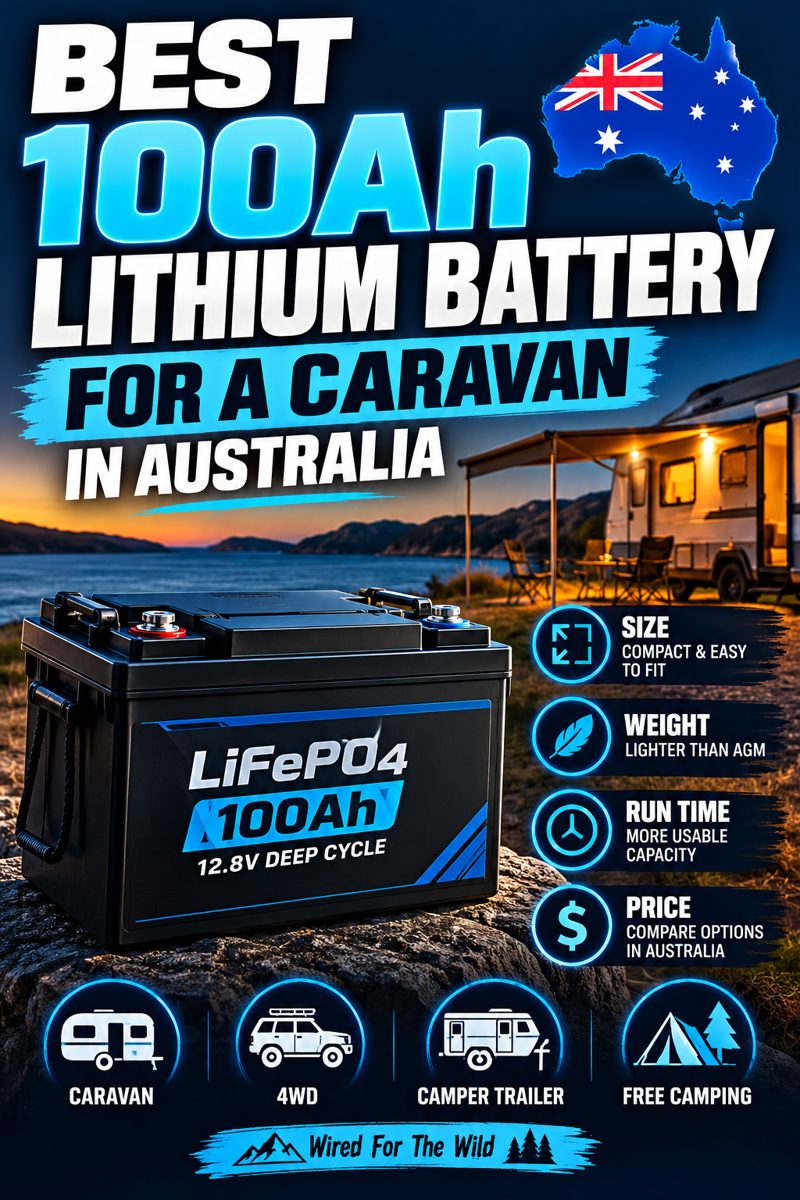
Turn it off overnight or when you're not using it, and it makes a big difference. Our 100Ah lithium guide and solar guide help you size the rest of your system.
Powering it off-grid
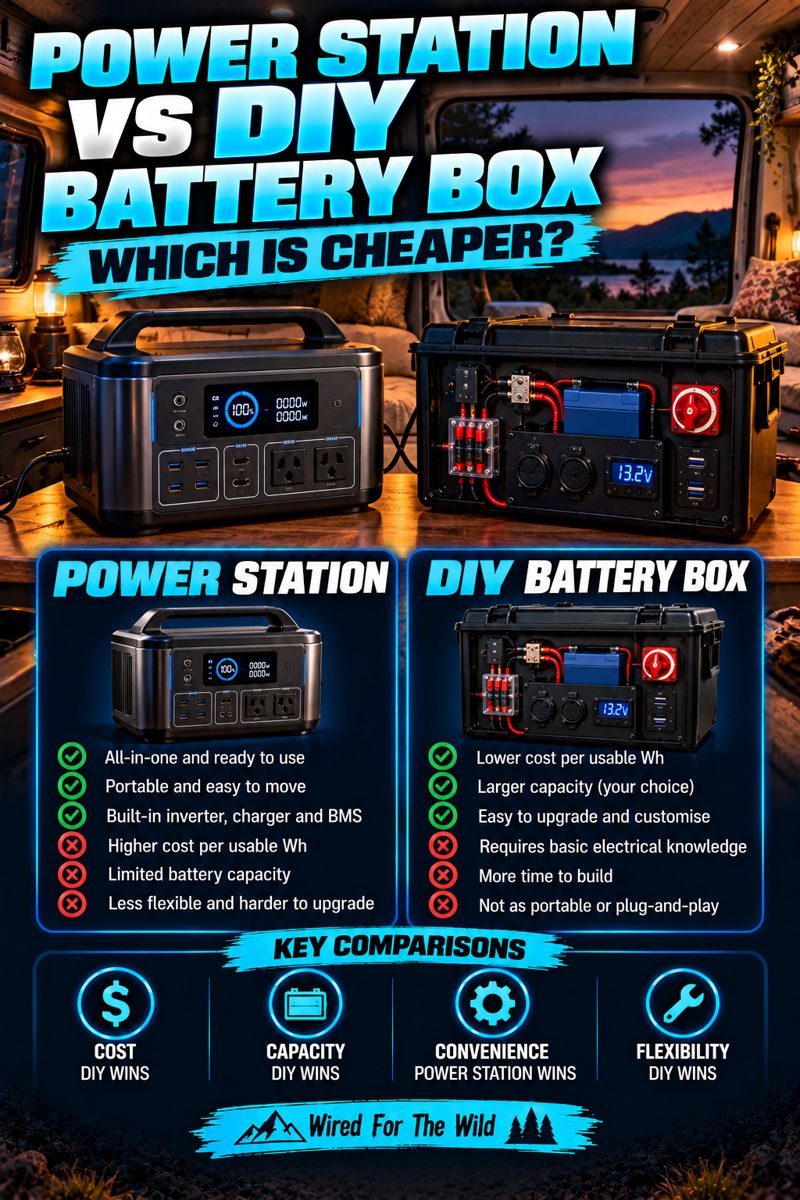
- From a power station: the simplest option. Many power stations have USB-C or DC outputs that suit a Mini, and an inverter outlet for a Standard dish.
- From your 12V system: a Mini can run from 12V with a suitable DC cable or USB-C power adapter. Fuse the circuit properly and follow Starlink's instructions.
- Through an inverter: works for a Standard dish, but costs extra power. Use a pure sine wave inverter sized comfortably above the dish's draw.
- Avoid modifying the dish or power supply. It can void the warranty and damage the kit.
Which Roam plan?
Roam plans are designed for travel. Starlink currently lists Roam 100GB, Roam 300GB and Roam Unlimited. Light users who mainly check emails, maps and the weather may be fine on a data-capped plan, while streaming and working remotely usually need more.
Roam plans can be useful for seasonal travellers, but check the current rules for pausing, in-motion use and pricing on starlink.com before you buy, because they change from time to time.
Setting it up at camp
- Clear view of the sky: trees and hills block the signal. Use the Starlink app to check for obstructions before you set up.
- Mounting: a pole mount, ground stand or roof mount keeps it steady and above obstructions. Secure it against wind.
- Cable runs: protect cables from foot traffic and doors, and keep connections out of the rain.
- Using it while driving: in-motion use needs suitable hardware and mounting. Check Starlink's rules before trying it.
Before you buy
- Referral rewards only apply to new customers who order Residential or Roam service on starlink.com. Kits bought from other retailers don't qualify.
- Check coverage and plan pricing for where you travel on starlink.com.
- Plan your power first, so the dish doesn't flatten your battery.
Get Starlink with my referral link
This is my Starlink referral link. If you sign up for Residential or Roam service on starlink.com through it, we both receive a referral reward from Starlink once your service has been active for two months. Starlink sets the amount and terms.
Gear picks
Pure sine wave inverter
- For a Standard dish off-grid
- Size above the dish's draw
Telescopic mounting pole
- Lifts the dish above obstructions
- Check it suits your Starlink model
As an Amazon Associate I earn from qualifying purchases. Prices and availability are shown on Amazon.